Treating Projects as Products
Projects exist to solve problems and in that sense, projects are products. When we start treating projects as products, we unlock a new level of ownership, purpose and effectiveness.
March 7, 2025
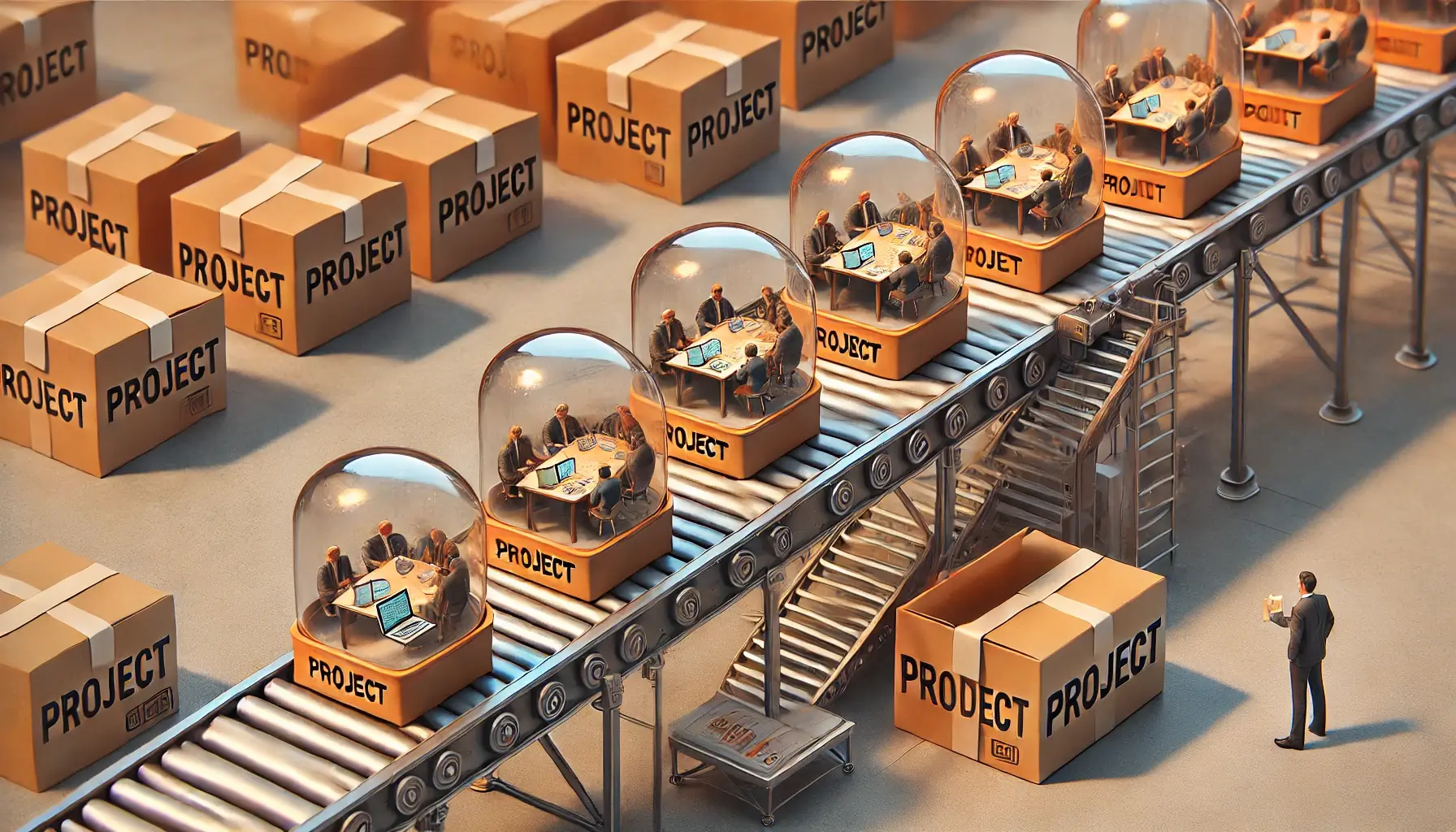
Over the years, we’ve seen endless debates about the differences between product managers, program managers, project managers and their technical counterparts. Ask ten people what these roles entail and you’ll get ten different answers, each shaped by their company, culture, personal experiences and in many cases, how they want to describe themselves.
The bottom line though is that all these roles require great project management skills, and great project management requires great product management skills. The best project managers don’t just manage tasks, they own and solve problems. They understand that projects are not just collections of deliverables, that a project is a product, a product with a specific value proposition, customers, users, costs and so on.
When you think of a project as a product, you stop being a task manager and become a problem-solver, advocate and leader.
Projects are often viewed far too tactically: a collection of tasks, deadlines, resources and a budget. Project managers sometimes reinforce this perception by simply collecting requirements, managing schedules and checking off deliverables without ever fully owning the problem they’re solving. Projects managed this way are rarely successful, nor do they create a meaningful impact.
At their core, projects and products have much more in common than you might think. Both require careful planning, execution, and stakeholder engagement to succeed. Both are fundamentally about solving problems and delivering value. Here’s a closer look at their shared DNA:
- Problem-Solving Focus: Both projects and products exist to solve a specific problem or address a need. The clearer and more compelling the problem statement, the more likely the endeavor is to succeed.
- Value Proposition: Just as products must have a unique value proposition to attract users and customers, projects need one to secure resources, gain buy-in and maintain momentum.
- Stakeholder Engagement: Products have users and customers; projects often have users and stakeholders. Both groups need to be informed, engaged and convinced of the value they’re receiving.
- Metrics for Success: Products are evaluated based on KPIs like customer retention, revenue growth or market share. Similarly, projects need measurable goals - whether it’s delivering on time, staying within budget or achieving strategic objectives.
- Lifecycle Thinking: Products go through stages like development, launch, growth, maturity and decline. Projects, too, have phases: initiation, planning, execution, monitoring and closure. Thinking in terms of a lifecycle ensures you manage each stage with intent.
The Tactical Approach
The tactical approach to project management - focusing solely on deliverables, deadlines and budgets - misses the bigger picture. This mindset often leads to:
- Lack of Ownership: Without a deeper connection to the problem, project managers become task coordinators rather than problem solvers. This limits innovation and impact.
- Missed Opportunities: Tactical management ignores the chance to align projects with larger organizational goals, reducing their strategic value.
- Stakeholder Fatigue: Without a clear narrative or value proposition, stakeholders may lose interest or question the project’s importance.
Managing Projects Like Products
Thinking of a project as a product doesn’t just change how you describe it; it transforms how you manage it. Here are some principles to consider:
- Develop a Strong Brand: Great products have a clear identity. The same should be true for your projects. What problem is the project solving? What value does it bring? What makes it compelling to stakeholders? A strong project brand (including a brand identity) helps rally support, attract resources and align efforts.
- Market the Project: Even the greatest products don’t sell themselves, a great deal of effort goes into marketing. Similarly, projects need internal marketing to articulate their value proposition, build engagement and maintain momentum. Your stakeholders are your customers and it’s your job to keep them informed and invested.
- Measure Progress: Products are evaluated based on their success in the market. Projects should be no different. Define key metrics for progress and outcomes. This could include budget adherence, schedule milestones, quality benchmarks or impact metrics tied to the project’s goals.
- Focus on ROI: Every project should have a clear return on investment. It might be financial, operational or strategic, but if the project doesn’t provide measurable value, why are you doing it? Clearly articulating the ROI helps justify the project’s existence and guide decision-making throughout.
- Design the User Experience: Everyone who interacts with your project is a user, so design their user journey just as intentionally as you would the user experience of your app. How are they introduced to your project? How do they get value from it? Is it solving their problem? How can they ask questions or give feedback? Would they recommend your project to their colleagues?
- Know When to Pivot or Sunset: Great product managers know when a product is not working or no longer serves its market. The same principle applies to projects. If a project no longer has clear value or a customer base, it’s time to pivot or stop investing altogether.
The Benefits of a Product Mindset
Treating projects as products makes them more effective and meaningful. When you think of a project as a product, you stop being a task manager and become a problem-solver, advocate and leader. Here’s what changes:
- Clarity for Stakeholders: A clear project brand and value proposition help everyone understand why it matters and what it aims to achieve.
- Aligned Teams: Shared goals and metrics keep everyone focused and working toward the same vision.
- Better Decisions: Framing trade-offs in terms of value and impact simplifies decision-making.
- Increased Engagement: Treating stakeholders as customers fosters stronger communication and collaboration.
- Improved Outcomes: Projects managed with this mindset are more likely to deliver lasting value.
A Call to Action
Every project is an opportunity to solve a problem and create impact. By treating your projects as products, you elevate their purpose, and your role in delivering them. Define the problem, craft a value proposition and build with care. The results will speak for themselves.
Our mission is to empower organizations by fostering cultures of clarity and transparency, engagement and collaboration. Through innovative tools, best practices and partnership with leaders, we strive to unlock the competitive advantages inherent in healthy organizations.