BYO Project Management Framework
The best teams don’t conform to a methodology, they build their own playbook based on the unique challenges of their projects.
May 30, 2025
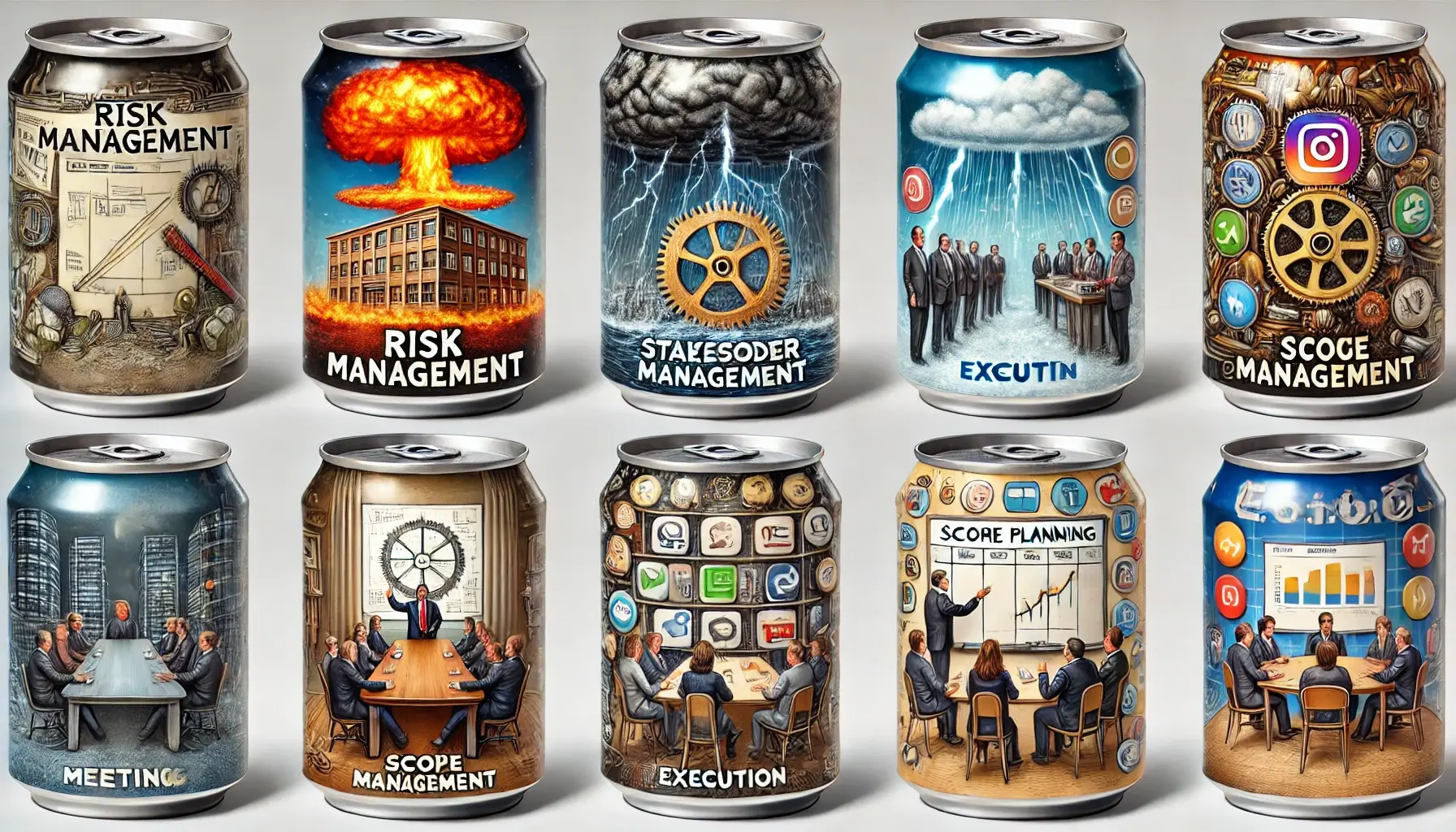
Project management frameworks often inspire intense loyalty. Many teams become comfortable with an approach and stick to it because learning about and adopting new frameworks can feel daunting. Agile, Scrum or one of the others may feel like the "right way" to manage projects, but the reality is that every framework is just a collection of best practices, designed to optimize projects under particular conditions. If your conditions don’t match, frameworks will work against you, not for you.
Rather than choosing from a menu of project management frameworks, the best teams assemble their own tailored frameworks by selecting the best practices that make the most sense for their project, team and constraints. Lets take a look at how different methodologies work, break down their core best practices and explore how you can build a framework that is ideally suited to your needs.
The key goal of any project management framework is to create clarity - clarity around priorities, processes, responsibilities and so on.
A Quick Overview of Popular Frameworks
While new frameworks are often billed as evolutionary and as improvements on their predecessors, the reality is that different project management methodologies exist to suit different types of work. Understanding their strengths and limitations is crucial when choosing how to structure a project.
Agile is ideal for projects with high uncertainty, where requirements may shift rapidly. It emphasizes flexibility, iterative development and continuous feedback. However, its lack of upfront planning makes it less suited for industries where failure isn’t an option, such as aerospace or infrastructure. It’s also worth noting that while flexibility is a virtue in some projects, too much flexibility is a failing in other projects.
Scrum, a structured implementation of Agile, introduces roles (scrum master, product owner) and ceremonies (sprints, stand-ups, retrospectives). It works well for teams that need discipline in their Agile approach but often becomes burdensome when applied dogmatically.
Kanban is a visual workflow management method, excellent for continuous delivery projects like IT service management. It allows work to flow naturally but lacks strong planning structures for projects with deadlines and dependencies.
Lean focuses on efficiency and eliminating waste. Originally developed for manufacturing, it has influenced Agile software development but may not be the best fit for projects requiring significant innovation.
Waterfall follows a linear, sequential approach. It provides clarity and predictability, making it essential for projects with strict regulatory requirements or well-defined scopes. However, it is not well suited for projects with unclear requirements and those that need to respond quickly to feedback.
Prince2 and PMBOK are highly structured methodologies used in large organizations. They emphasize documentation, governance, and risk management. While effective for enterprise-scale initiatives, they can introduce unnecessary bureaucracy in fast-moving environments.
Every framework has its place, but applying them uniformly to different projects that have different needs is a common mistake. The smarter approach is to break frameworks down into their core best practices and mix and match what will work best for a specific circumstance.
Best Practices vs. Frameworks
Every project, regardless of the framework used, must handle key functional areas: scoping, communication, risk management, stakeholder engagement, execution and so on. Each area has multiple best practices associated with it, borrowed from different methodologies.
Scoping & Planning
Some projects require extensive upfront planning, while others benefit from a more flexible, evolving scope. Waterfall projects often rely on detailed functional specifications, while Agile projects use user stories and iterative scoping. If your project has clear requirements from the start, structured scope documents make sense. If there’s a lot of uncertainty, Agile’s iterative discovery approach is more practical. Some projects benefit from a hybrid approach, wherein well known work is captured in detailed specifications while areas with a lot of ambiguity leverage iterative scoping.Meetings & Communication
Project teams must decide how to keep stakeholders and team members informed without wasting time. Agile emphasizes daily stand-ups, while some remote teams prefer asynchronous updates via written status reports. Traditional organizations rely on weekly status meetings, while high-stakes projects require formal stakeholder review sessions. The right choice depends on the structure and maturity of the team, the complexity of the project and stakeholder expectations.Risk Management
Managing risk means different things in different contexts. PMI and Prince2 emphasize structured risk identification and contingency planning, which is crucial for projects with high financial or safety stakes. Agile teams, on the other hand, manage risk through frequent iteration and fast feedback loops. If a project’s risks are well-known, structured planning is effective. If risks emerge unpredictably, an adaptive approach may work better.Stakeholder Management
Keeping stakeholders engaged without overwhelming the team is a challenge. Agile projects often rely on continuous feedback loops, while Waterfall-based initiatives may use formal steering committees. If stakeholders need (really, truly, need) to be deeply involved, Agile style engagement works well. If they only need periodic updates, well written updates or structured meetings may be more effective.Execution & Delivery
Different projects require different execution strategies. Scrum’s sprint cycles make sense when work can be broken into small, shippable increments. Kanban’s pull-based workflow is great for continuous workstreams. Traditional projects with hard deadlines benefit from milestone-driven planning. Choosing the wrong execution method can lead to unnecessary friction.Some Assembly Required: Building Your Own Framework
Instead of selecting a methodology and forcing the project to fit, start by assessing the project’s needs. For example:
- How much ownership does the team have over scope and goals?
- Are requirements well-defined or evolving?
- Is risk predictable or uncertain?
- Do stakeholders need frequent engagement or periodic updates?
- Is the goal iterative discovery or a specific, well articulated deliverable?
- Is the team experienced and co-located, or new and distributed?
Once these factors are considered, pick best practices that align with your needs rather than a specific framework. Borrow structured planning from Waterfall, iterative experimentation from Agile, stakeholder engagement strategies from PMBOK, whatever makes the most sense. Finally, recognize that a project’s needs change over time. The approach that works at the start might not be ideal later, so adaptability is key.
The best teams don’t conform to a methodology, they build their own playbook based on the unique challenges of their projects. The key goal of any project management framework is to create clarity - clarity around priorities, processes, responsibilities, etc. - so that teams can work efficiently and with confidence. The next time you’re planning a project, don’t ask “Which framework should we use?” Instead, ask “what best practices will work best for this project, with this team?” That shift in thinking leads to better project outcomes and greater efficiency.
Our mission is to empower organizations by fostering cultures of clarity and transparency, engagement and collaboration. Through innovative tools, best practices and partnership with leaders, we strive to unlock the competitive advantages inherent in healthy organizations.